
Overview
Some harmful chemicals were used so widely that they now contaminate groundwater, soil, and air at hundreds or thousands of sites in a single state.
They include gasoline additives, dry-cleaning and degreasing solvents, fumigants, and petroleum products, among others. The cost of fully investigating and restoring those resources to pre-discharge conditions often runs far beyond what agency budgets can cover. State law gives sovereigns claims and remedies that private parties may not have. Those include:
- full natural resource damages
- cost recovery under state environmental statutes
- public nuisance
- civil penalties under consumer protection laws
- in some states, protection from ordinary limitations periods for actions brought in the State’s name
We help states use those tools so that the companies responsible for contamination pay to clean it up, not taxpayers.
What we handle for public clients
- Statewide investigations before any lawsuit is filed. We map known and suspected release sites, identify responsible parties, and estimate restoration costs and other damages.
- Statewide natural resource damages and cost-recovery actions. We develop a litigation strategy for the State to pursue against the manufacturers, refiners, distributors, and major dischargers of hazardous substances.
- Drinking water and groundwater claims. We pursue claims for public water suppliers, municipalities, and utility authorities to recover for injuries to water resources.
- Claims under state environmental statutes. We develop and pursue claims under each State’s unique environmental laws, alongside products liability, public nuisance, trespass, and negligence claims.
- Deceptive marketing and concealment claims. We develop and pursue claims under state consumer protection laws against manufacturers that hid what they knew about their products’ dangers.
Our work for public clients also goes beyond environmental cases. We were co-lead counsel for the State of Connecticut in tobacco litigation that recovered approximately $3.6 billion. We also recovered $45 million for New Jersey in a securities opt-out action against Qwest, and represented the City of Philadelphia as co-lead counsel in the IKON securities litigation ($111 million settlement).
How engagements with public clients work
-
- Retention as special counsel. We are generally retained through the attorney general’s office or the responsible agency, under the State’s outside-counsel procurement rules. We respond to requests for proposals, requests for qualifications, and statements of qualifications.
- The State controls the case. The attorney general maintains final authority over filing, litigation strategy, and settlement. We report on whatever schedule and in whatever format the State sets.
- Fee structures that fit the State’s rules. We work on a contingent fee, so the case costs taxpayers nothing unless there is a recovery, and we advance all expert and litigation costs. Where the State’s rules call for it, we also work hourly or on a hybrid basis. Every structure is subject to the State’s caps and transparency requirements.
- Investigation before filing. Engagements usually begin with a defined investigation phase. The State then decides whether, where, and against whom to file.
- Co-counsel and in-state counsel. We work alongside the State’s own lawyers and, where it helps the State, with leading environmental attorneys and in-state firms as co-counsel.
- Conflicts screening. We run every engagement through firm-wide conflicts screening before we accept it.
Rulings that matter to sovereign plaintiffs
Our cases have produced decisions on issues that matter to other states and communities:
New Jersey Dep’t of Env’t Prot. v. Amerada Hess Corp., 323 F.R.D. 213 (D.N.J. 2017). The court rejected defendants’ proposed requirement that the State show an injury or threat to human health or the environment to recover primary restoration damages under the Spill Act. The State must instead show only that its restoration plan is practicable in light of site-specific conditions.
Maryland v. Exxon Mobil Corp., 406 F. Supp. 3d 420 (D. Md. 2019). The court largely denied defendants’ motion to dismiss the State’s statutory and common law claims for statewide environmental injuries. The State’s product liability (including abnormally dangerous activity) and statutory claims proceed, and the State may rely on commingled-product and market-share theories at the pleading stage without linking particular defendants to particular releases.
In re MTBE, 2022 WL 2967103 (S.D.N.Y. July 27, 2022). New Jersey may seek restoration damages for MTBE contamination regardless of ongoing remediation efforts. Exxon’s motion to dismiss those claims as unripe was denied.
In re MTBE, 2024 WL 1994205 (S.D.N.Y. May 6, 2024). The court denied three defense motions for partial summary judgment. It held that defendants had not shown Pennsylvania common law bars natural resource damages, that nullum tempus bars a limitations defense to the Commonwealth’s statutory subrogation (Underground Storage Tank Indemnification Fund) claims, and that defendants’ Act 2 liability-shield argument for closed sites fails.
In re MTBE, 2025 WL 1475495 (S.D.N.Y. May 22, 2025). The court granted the Commonwealth summary judgment on defendants’ estoppel and assumption-of-risk defenses, including estoppel arguments based on the Department of Environmental Protection’s site-closure approval letters.
Boynes v. Limetree Bay Ventures LLC, 110 F.4th 604 (3d Cir. 2024). The Third Circuit affirmed a preliminary injunction requiring a refinery operator to supply drinking water to affected residents.
In short, we help shape the law governing state environmental claims and closely track legal developments in these areas.
How we build statewide cases
Statewide contamination cases are won or lost on data and rigorous science. A single case can involve thousands of release sites, decades of regulatory records and competing scientific evidence.
- Site inventories and GIS mapping. We map contamination across the State to define the scope of injury and link it to responsible parties.
- Litigation databases and AI-assisted document review. We process millions of pages of corporate and regulatory records efficiently.
- Scientific witnesses. We hire expert hydrogeologists, toxicologists, natural resource damages economists, and regulatory consultants.
- Coordination with agencies. We work cooperatively with the environmental and health agencies that hold the State’s data and run its programs, and bring in our own support staff to reduce the burden on State regulators at all stages of the case.
- Trial readiness from the start. We develop a trial plan at the start of every investigation and prepare in advance for the arguments and tactics that the responsible companies will use over the course of the lawsuit.
States, attorneys general, and public entities: For a confidential briefing or a statement of qualifications, contact Scott Freda, Senior Director of Government Representation, at (215) 875-4666 or sfreda@bergermontague.com.
Meet The Team
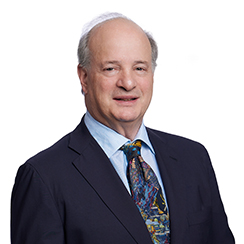
[ View Bio for Daniel Berger ]
Executive Shareholder

[ View Bio for Shanon J. Carson ]
Executive Shareholder

[ View Bio for Michael Dell’Angelo ]
Executive Shareholder

[ View Bio for Y. Michael Twersky ]
Shareholder

[ View Bio for Tyler E. Wren ]
Of Counsel

[ View Bio for William A. Walsh ]
Senior Counsel

[ View Bio for J. Quinn Kerrigan ]
Senior Counsel


[ View Bio for Jordan Hughes ]
Associate

[ View Bio for Jillian Knox ]
Associate
[ View Bio for Ben Buchholz ]
Associate
Environmental Special Counsel to States, Attorneys General, and Public Entities FAQs
How does a state retain Berger Montague?
Usually as special counsel through the attorney general’s office, under the State’s rules for hiring outside counsel. Berger Montague responds to requests for proposals and qualifications, and we can brief the State’s team before any procurement begins.
What does it cost the State?
In most environmental engagements, nothing unless there is a recovery. Berger Montague works on a contingent fee and advances the cost of experts and litigation. Where the State requires it, we can also work hourly or under a hybrid arrangement within the State’s fee caps and disclosure rules.
Who controls the litigation?
The State does. The attorney general or other State client always maintains decision-making authority over filing, strategy and settlement, and we report on the schedule the State sets.
Can a state still recover for contamination that began decades ago?
Often, yes. Many states’ environmental statutes, natural resource damages claims and public nuisance doctrines reach ongoing contamination. Some states also exempt actions brought in the State’s own name from ordinary limitations periods. Whether that applies depends on the State’s law, and evaluating it is part of the investigation phase.
Will you work with our attorneys and other outside counsel?
Yes. Our statewide matters are run jointly with attorneys general and agency counsel, and often with co-counsel and in-state firms
What happens in an investigation before a lawsuit?
We work with the State’s agencies to assemble data on known and suspected sites, map contamination, identify the parties responsible, and estimate restoration costs. The State then decides whether and how to proceed.

Contact UsFree Case Evaluation
"*" indicates required fields
By clicking SUBMIT you agree to our Terms of Use and Privacy Policy and you are providing express consent to receive communications from Berger Montague via calls, emails, and/or text messages. We reserve the right to collect, retain and use the data you provide.


On the Cutting Edge of the Profession
Legal Intelligencer